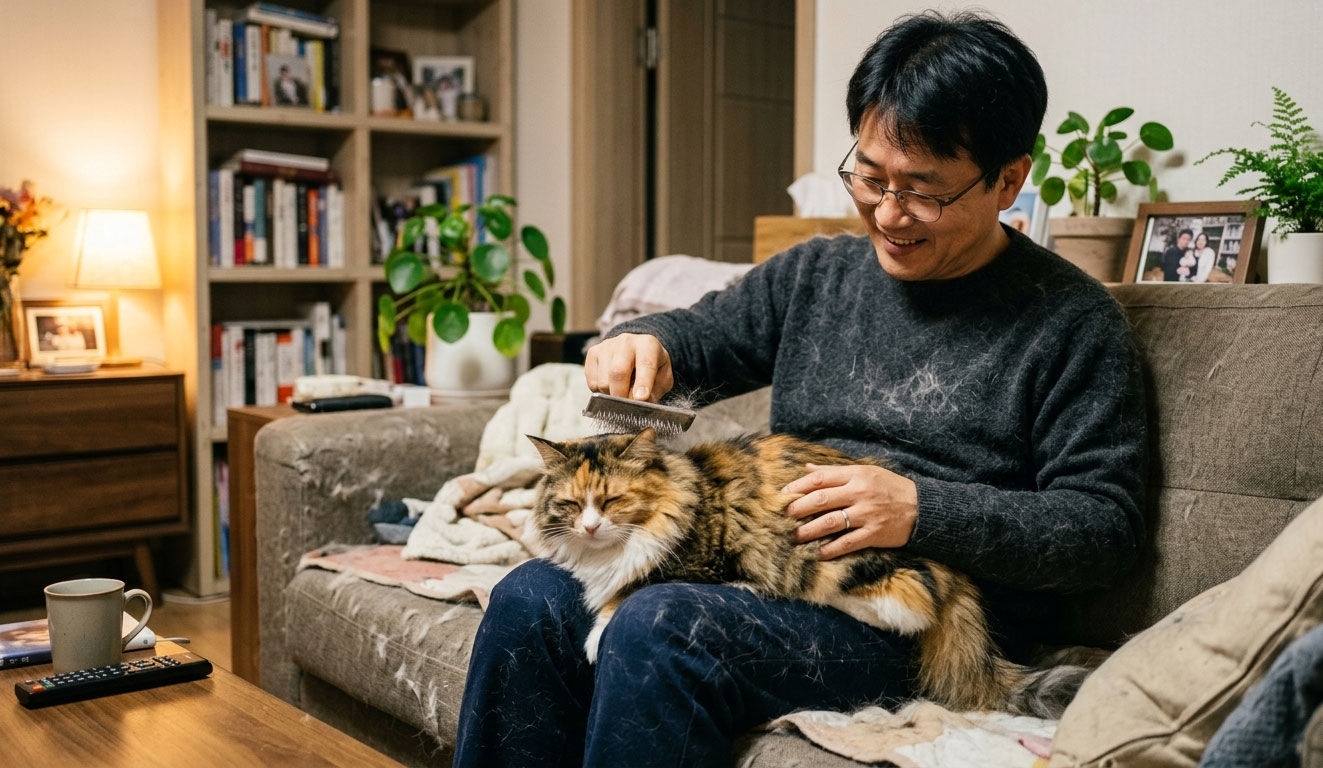
The Day My Child Wouldn't Eat

The child, who usually would run over at the mere sound of the food bowl, was curled up in a corner that day. "What's wrong? Are you sick?" I kept asking, even though I knew there would be no answer. That day, I realized for the first time just how helpless a guardian is in front of a child who cannot speak.

On the way to the vet, looking at the child curled up in the carrier, I felt inexplicably sorry. I should have noticed sooner; could it be because I changed the food? Did I do something wrong? Anyone who raises a pet has likely felt this way at least once. That feeling of constantly blaming yourself, even when you have done nothing wrong, is exactly what it means to be a pet owner.

Based on that experience, this article summarizes the warning signs and response methods that pet owners should be aware of when their pet is sick.

There are five main signs that your pet is sick.

Pets cannot tell you they are sick. Therefore, the most important aspect of care is for the owner to notice these signs first. The following five signs are typical abnormal indications that require considering a visit to the veterinary clinic.

The first sign — Changes in appetite

If your pet eats significantly less than usual or stops eating altogether for more than a day, caution is required. Conversely, suddenly drinking too much water can also be a sign of kidney disease or diabetes. Changes in appetite are the most basic signal that something is changing inside the body. Keeping track of your pet's usual food and water intake helps you detect abnormalities quickly. If you are curious about the impact of choosing the right food on maintaining health, referring to How to Read Dog Food Ingredient Labels or How to Read Cat Food Ingredient Labels will be helpful.

Second Sign — Changes in Activity and Behavior

If their movement decreases significantly compared to usual, they show no interest in their favorite toys, or they avoid places they usually climb, it could be a sign of pain or lethargy. Conversely, repeatedly licking or scratching the same area is a sign that there is itching, pain, or a wound in that area. In particular, in the case of senior animals, a decrease in activity can look like natural aging, making it easy to overlook.

Third Sign — Digestive Abnormalities

If vomiting or diarrhea does not stop after just one or two episodes but repeats for more than a day, it may not be a simple digestive disorder. In particular, if there is blood mixed in the vomit or stool, you should visit a veterinary clinic immediately. If digestive problems appear immediately after switching to a new food, the cause may be that the transition speed was too fast, so it is best to revert to slowly mixing the new food with the old one.

Fourth Sign — Changes in Eye, Nose, and Ear Discharge

If eye discharge increases more than usual or changes color, if yellow or green discharge comes from the nose instead of clear mucus, or if there is an odor coming from the ears or the animal keeps scratching its ears, these can all be signs of infection or inflammation. The earlier these symptoms are detected, the easier the treatment is and the lower the cost.

Fifth Sign — Changes in Breathing and Posture

If the cat breathes heavily, maintains a bent posture with its belly on the floor, or its gait has changed, it could be a sign of pain or internal organ problems. It is especially important to carefully observe changes in posture and breathing, as cats have a strong tendency to hide their pain.

반려동물 이상 신호 확인 이미지

Veterinary Clinic: When Should You Go Immediately and When Should You Just Watch?

When abnormal signs appear, the biggest concern for owners is, "Should I go to the vet right away, or can I wait and see a little longer?" Referring to the following criteria will help with your judgment.

**Cases requiring immediate visit to the veterinary hospital**

**You must visit a veterinary hospital without delay if the following symptoms appear. These include cases where there is blood mixed in the vomiting or diarrhea, breathing very rapidly or with the mouth open, sudden weakness in the hind legs or collapsing, abnormal swelling of the abdomen, or blurred consciousness or unresponsiveness. It is advisable to save the locations of 24-hour emergency veterinary hospitals in advance, as emergencies can occur without warning.**

**Cases where it is acceptable to visit after observing for a day or two**

**If the animal skips a meal, returns to normal after one or two episodes of mild vomiting, or is quieter than usual but drinks water and is active, it is appropriate to observe its condition for about a day; if the symptoms persist, it is advisable to visit the hospital. However, if symptoms do not improve or worsen, you must visit a veterinary clinic immediately.

동물병원 방문 판단 기준 이미지

In Front of the Examination Room — Things a Guardian Should Prepare

There is information that helps with diagnosis if you prepare it in advance when visiting a veterinary clinic. The more accurate information you provide to the veterinarian, the higher the accuracy of the diagnosis and the less unnecessary tests you can perform.

Recording Symptoms

Make a note of when the abnormal symptoms started, what the symptoms are, and how often they appear. If there was vomiting or diarrhea, it is also helpful to record the frequency and color. Taking a short video of the moment symptoms appear with a smartphone is also very helpful for diagnosis.

Organize Recent Changes

Think in advance if you have changed the food, given new treats, if there is a possibility that they ate something during a walk, or if anything has changed inside the house. Minor changes that the owner does not remember could be the cause.

Keep Basic Health Records

It is a good idea to bring vaccination records, neutering status, and any medications or supplements currently being taken. If it is a first visit to the vet, bringing medical records from previous vet visits is even more helpful.

동물병원 방문 준비 이미지

Things You Only See After Getting Sick

Fortunately, the child did not have a serious illness that day. As I walked out holding the prescribed medicine, I could finally breathe a little. When I returned home and saw my child start eating little by little, I couldn't have been more grateful for that small sight.

Something has changed since then. Things I used to just let slide when my child ate well now bring me peace of mind just from that alone. Watching them drink water, lounging in the sunlight, bringing a toy in their mouth—things I used to take for granted—I only began to see how precious they truly are after they got sick. I learned thanks to my child that a healthy day is a gift.

If you want to know more about what meaning living with a pet brings to your daily life, I recommend reading Things Pets Taught Me together.

건강하게 회복한 반려동물 이미지

Conclusion — Let's take better care of them while they are healthy, before they get sick

There are five main warning signs that pets send: changes in appetite, changes in activity levels and behavior, digestive issues, changes in secretions from the eyes, nose, and ears, and changes in breathing and posture. If you keep these five points in mind, you can quickly detect abnormalities and visit the vet at the appropriate time.

**Self-blame is a natural emotion for a guardian, but the most important thing is to observe them more carefully starting from this moment. The best care involves holding them often while they are healthy before they get sick, and not missing even the smallest changes. If you are considering adopting a pet for the first time, I recommend reading Things You Must Know Before Adopting a Pet as well.**

**※ The health-related information in this article is for general reference only; please be sure to consult a veterinarian for accurate diagnosis and treatment.**