잠이 보약이라는 말, 과학이 증명했다
"일찍 자고 일찍 일어나야 한다"는 말을 들으며 자랐다. 그런데 막상 어른이 되고 나면 늦게까지 일하고, 스마트폰을 붙잡고, 생각이 많아 뒤척이다 결국 알람 소리에 억지로 눈을 뜬다. 이런 아침이 며칠씩 이어지면 몸도 마음도 뭔가 어긋난 느낌이 든다.
그 느낌은 기분 탓이 아니다. 수면 부족은 실제로 몸 전체에 영향을 미친다. 면역력, 기억력, 감정 조절, 체중, 심지어 피부까지. 잠은 단순히 쉬는 시간이 아니라 몸이 스스로를 고치고 재정비하는 가장 중요한 시간이다. 그렇다면 우리는 왜 이렇게 잠을 못 자는 걸까. 이 글에서는 수면을 방해하는 원인과 오늘 밤부터 바로 실천할 수 있는 해결 방법을 함께 살펴본다.
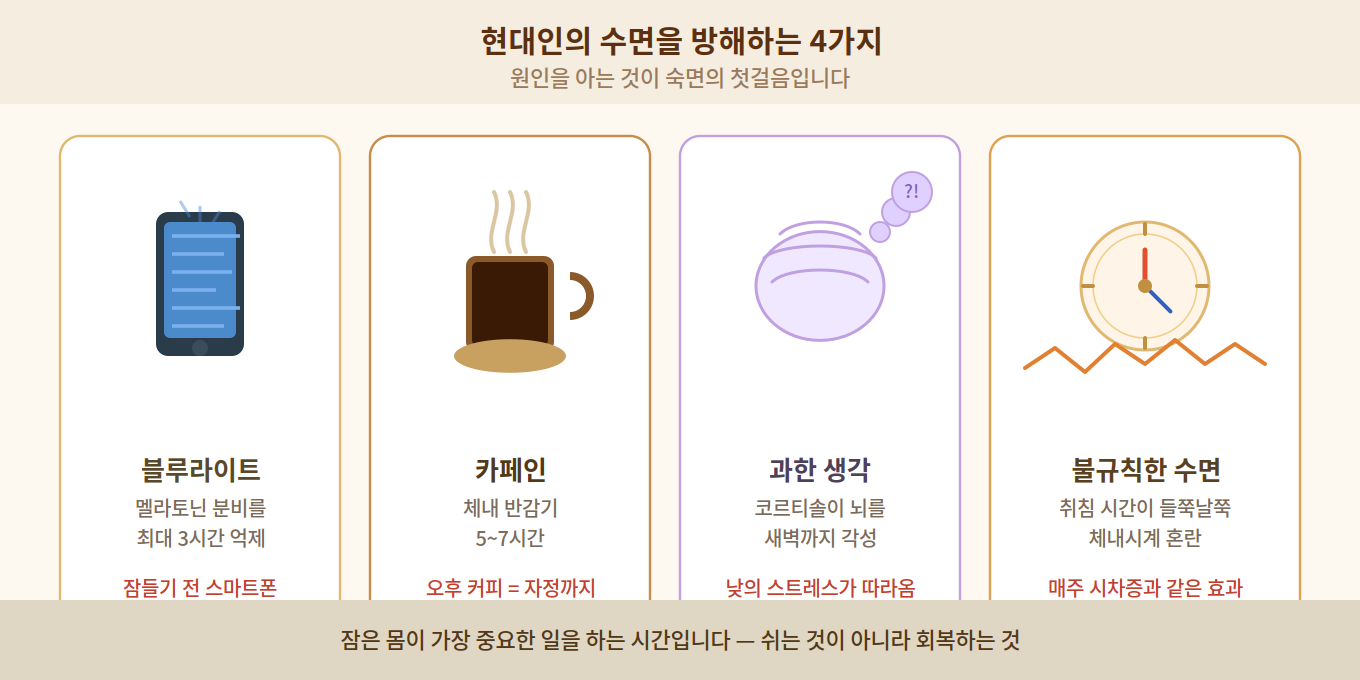
수면을 방해하는 원인은 크게 4가지입니다
잠을 자려고 누웠는데 잠이 오지 않거나, 자도 자도 피곤한 느낌이 든다면 다음 네 가지 원인 중 하나 이상이 해당될 가능성이 높다. 원인을 정확히 파악하는 것이 해결의 첫 단계다.
첫 번째 원인 — 블루라이트로 인한 멜라토닌 억제
스마트폰, 태블릿, TV 화면에서 나오는 블루라이트는 뇌가 밤이라는 신호를 받지 못하게 방해한다. 자기 직전 30분간 스마트폰을 보는 것만으로도 수면 호르몬인 멜라토닌 분비가 최대 3시간까지 억제된다. 몸은 자야 한다고 하는데 뇌는 아직 낮이라고 착각하는 상황이 벌어지는 것이다. 스마트폰 사용이 수면 외에도 뇌 피로에 미치는 영향이 궁금하다면 스마트폰 없이 4시간, 뇌가 쉬기 시작했다를 함께 읽어보길 권한다.
두 번째 원인 — 카페인의 잔류 효과
카페인의 반감기는 5~7시간이다. 오후 2시에 마신 아메리카노 한 잔의 카페인이 절반으로 줄어드는 데 그만큼의 시간이 걸린다는 뜻이다. 밤 11시에 잠들려 할 때 몸속에는 여전히 카페인이 남아 있다. 오후 늦게 마신 커피 한 잔이 그날 밤 수면의 질을 떨어뜨리는 직접적인 원인이 된다.
세 번째 원인 — 끊이지 않는 생각과 심리적 각성
누웠는데 내일 할 일, 해결되지 않은 문제, 걱정들이 머릿속에 떠오른다면 교감신경이 활성화된 상태다. 이 상태에서는 몸이 긴장을 풀지 못하고 수면으로 진입하기 어렵다. 만성 스트레스나 과부하 상태가 지속되면 이 패턴이 반복된다. 특히 월요일 전날 밤에 잠들기 어려운 이유도 이 심리적 각성과 관련이 깊다.
네 번째 원인 — 불규칙한 수면 시간
주말에 평소보다 늦게 자고 늦게 일어나는 패턴이 반복되면 몸의 생체리듬이 흐트러진다. 이를 사회적 시차(Social Jetlag)라고 부르는데, 월요일 아침이 유독 힘들게 느껴지는 주된 이유 중 하나다. 생체리듬이 안정되지 않으면 잠드는 시간과 깨는 시간이 매일 달라지고, 수면의 질도 함께 떨어진다.
수면 부족이 몸에 미치는 영향
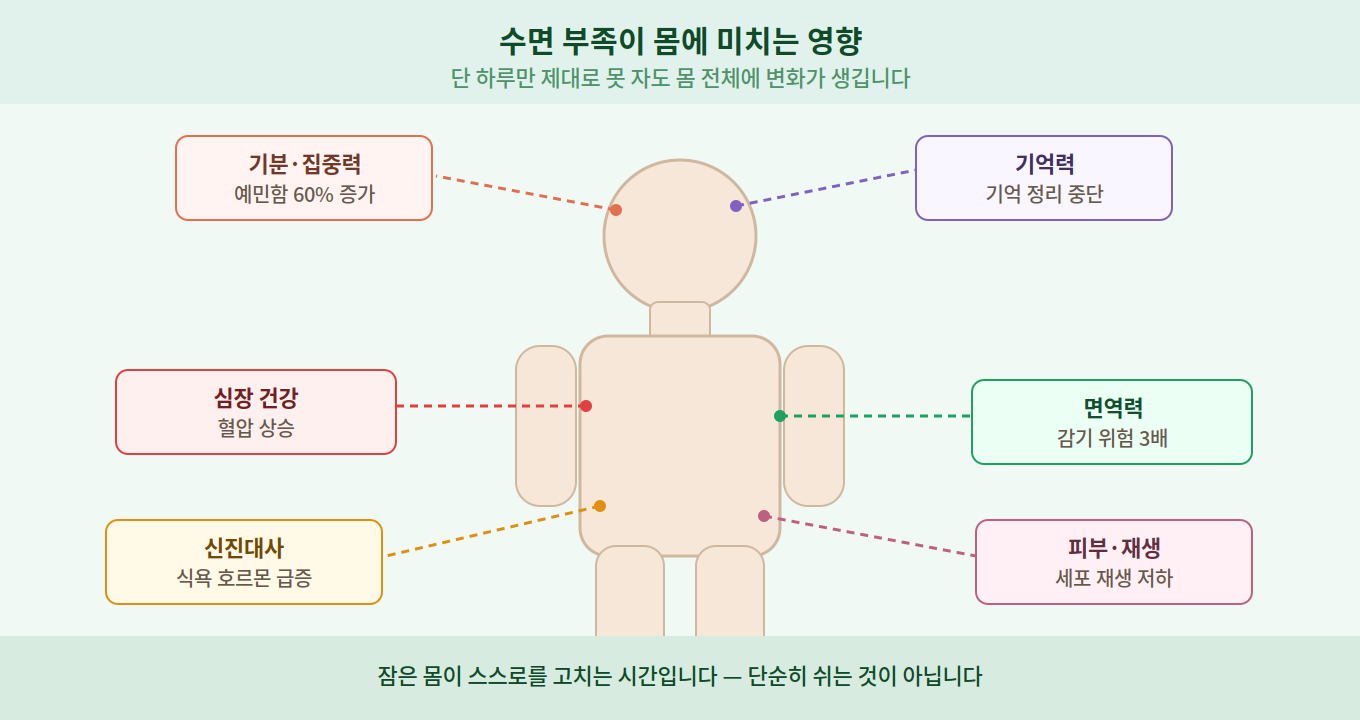
하룻밤만 제대로 못 자도 다음 날 예민해지고, 집중이 안 되고, 자꾸 단 것이 당기는 이유가 있다. 수면 부족은 뇌부터 피부까지 몸 전체에 실질적인 영향을 미친다.
면역력 저하
연구에 따르면 하루 6시간 이하로 자는 사람은 7시간 이상 자는 사람보다 감기에 걸릴 확률이 3배 높다. 수면 중에는 면역 세포가 활발하게 작동하고 염증 반응을 조절한다. 잠이 곧 면역인 이유가 여기에 있다.
식욕 조절 실패
수면이 부족하면 식욕을 촉진하는 그렐린 호르몬이 증가하고, 포만감을 전달하는 렙틴 호르몬은 줄어든다. 잠을 못 잔 다음 날 유독 배가 고프고 과식하게 되는 이유가 바로 이 호르몬 불균형 때문이다.
집중력과 감정 조절 능력 저하
수면 부족은 전두엽 기능을 떨어뜨린다. 판단력, 집중력, 감정 조절 능력 모두 전두엽이 담당하는 영역이다. 잠이 부족한 날 작은 일에도 예민하게 반응하거나 실수가 늘어나는 것은 의지력의 문제가 아니라 뇌의 회복이 부족한 결과다.
몇 시간을 자야 충분한가 — 수면 시간과 수면 구조
많은 사람들이 "나는 5시간만 자도 괜찮아"라고 말한다. 하지만 수면 연구자들은 이를 수면 부채에 적응된 상태라고 설명한다. 실제로 부족하다는 것을 느끼지 못할 뿐, 몸은 이미 그 대가를 치르고 있다는 것이다.
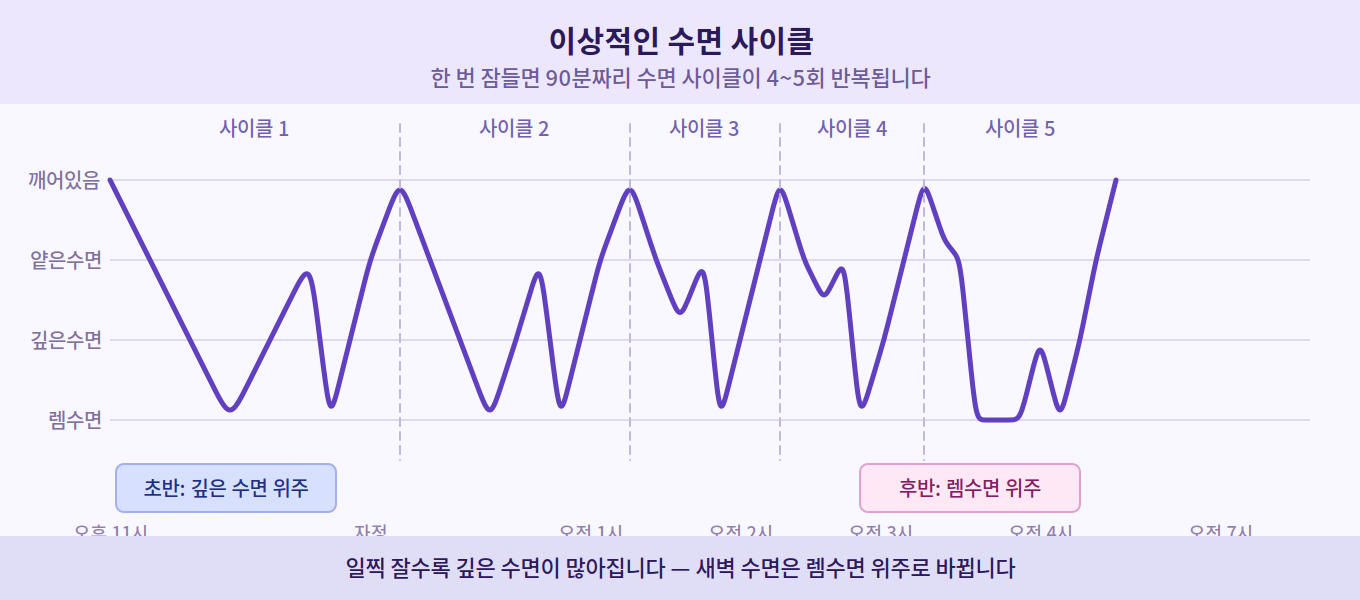
일반적인 전문가 권고 기준으로 성인은 하루 7~9시간의 수면이 필요하다. 수면은 90분 단위의 사이클로 4~5회 반복되며, 렘수면은 새벽으로 갈수록 비중이 늘어난다. 같은 7시간을 자더라도 새벽 2시에 잠들면 렘수면 비중이 줄어들어 수면의 질이 달라진다. 일찍 자는 것이 중요한 이유가 여기에 있다.
8시간을 누워 있었어도 자주 깨거나 깊은 수면이 부족하면 몸은 충분히 회복되지 않는다. 수면 시간만큼 수면의 구조와 질이 중요하다.
오늘 밤부터 바로 실천할 수 있는 수면 개선 팁 5가지
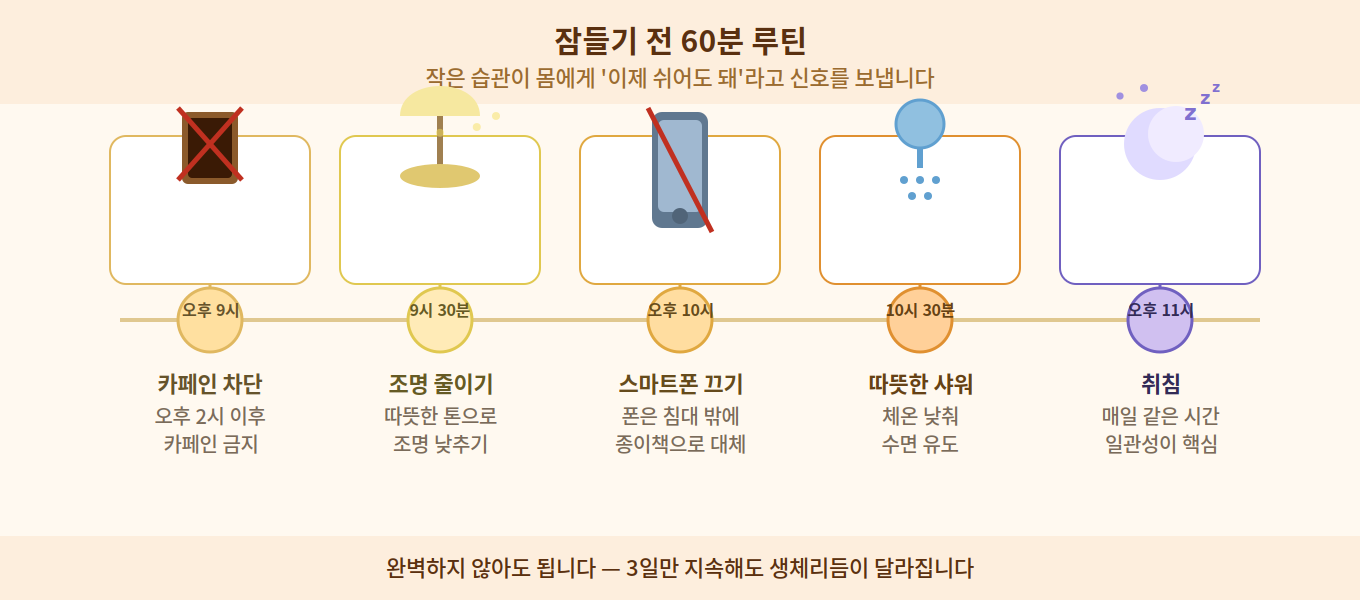
거창한 변화가 필요하지 않다. 작은 습관 하나가 수면을 바꾸고, 수면이 하루 전체를 바꾼다. 다음 다섯 가지는 오늘 밤부터 바로 적용할 수 있는 방법들이다.
팁 1. 잠들기 1시간 전 스마트폰 내려놓기
효과가 가장 크고 실천하기 가장 어려운 것이기도 하다. 스마트폰 대신 종이책이나 가벼운 스트레칭으로 대체해보자. 블루라이트 차단만으로도 수면 시작 시간이 눈에 띄게 앞당겨진다.
팁 2. 일어나는 시간부터 고정하기
잠드는 시간보다 일어나는 시간을 먼저 고정하는 것이 생체리듬 회복의 핵심이다. 주말도 평일과 1시간 이상 차이 나지 않게 유지하면 월요일 아침의 피로감이 크게 줄어든다. 월요일 아침 피로의 원인과 해결법이 더 궁금하다면 월요일 아침, 몸이 먼저 알아챈다를 함께 읽어보길 권한다.
팁 3. 오후 2시 이후 카페인 끊기
커피 대신 디카페인이나 허브티로 대체하자. 처음에는 오후에 졸리겠지만 2~3주가 지나면 저녁이 훨씬 편안해진다. 카페인 반감기를 고려하면 오후 2시가 마지노선이다.
팁 4. 침실을 수면 전용 공간으로 만들기
TV, 스마트폰, 업무 관련 물건을 침실 밖으로 내보내자. 뇌가 침대를 잠자는 곳으로 학습하게 만드는 것이 중요하다. 침실에서 다른 활동을 반복할수록 뇌는 침대에서도 각성 상태를 유지하려 한다.
팁 5. 낮잠은 오후 3시 이전, 20분 이내로
낮잠이 필요하다면 시간 제한을 두는 것이 중요하다. 오후 3시 이후의 낮잠이나 20분을 초과하는 낮잠은 야간 수면을 방해한다. 짧은 낮잠은 오후 집중력 회복에 효과적이지만, 길어지면 역효과가 난다.
결론 — 잠은 시간 낭비가 아니라 투자다
수면을 방해하는 원인은 크게 네 가지, 블루라이트, 카페인, 심리적 각성, 불규칙한 수면 시간이다. 이 중 하나라도 해당된다면 오늘 밤부터 하나씩 바꿔보는 것이 현실적인 시작점이다.
우리는 너무 오랫동안 적게 자는 것을 부지런함과 동일시해왔다. 하지만 잘 잔 다음 날의 집중력, 체력, 기분은 밤새워 일한 결과물보다 훨씬 나을 때가 많다. 몸이 스스로를 고치는 시간을 빼앗지 않는 것, 그것이 장기적으로 가장 생산적인 선택이다.
오늘 밤, 평소보다 30분만 일찍 누워보자. 스마트폰은 침대 밖에 두고, 불을 끄고, 눈을 감자. 아무것도 하지 않아도 되는 그 시간이 사실은 몸이 가장 중요한 일을 하는 시간이다.
※ 이 글의 수면 관련 수치는 일반적인 참고용이며, 수면 장애가 의심될 경우 전문의와 상담하기 바란다.